
New resellers usually price by copying a number they saw online, without knowing what's actually built into it. That's a guess, not a margin. Before you can set a real retail price, you need your actual landed cost — and only then does "what margin should I expect" become a question with a useful answer instead of a generic one.
Start with real landed cost, not unit price
Unit price is what you pay per bottle. Landed cost is what that bottle actually costs you once it's sellable — and the gap between the two is where new resellers most often lose margin without noticing.
Landed cost includes:
- Unit cost at your order's pricing tier
- Shipping to you, including any freight surcharges for flammable-liquid cargo
- Import duties and taxes, which vary significantly by country and trade agreement
- Your own packaging, labeling, or handling costs, if you repackage before resale
- A reasonable allowance for damage or short shipments, since even well-run suppliers occasionally have one
Only once you know this number per unit do you have something worth marking up. Pricing off unit cost alone routinely overstates real margin by a meaningful amount, especially on international orders with duties and freight involved.
Margin looks different depending on which business you're running
Retail resale (individual bottles to end consumers) generally supports the highest margin per unit, because you're the only markup in the chain. But that margin needs to cover more than the product — marketing, platform fees or storefront costs, returns handling, and your own time. A margin that looks healthy on paper can still lose money once those costs are counted honestly.
Wholesale-to-retail (bulk to shops, salons, or other small retailers) runs on lower margin per unit, because volume is the point and your buyer needs enough room left over to mark the product up again themselves. Price too close to your own landed cost and no retailer downstream can make their own math work — which means they won't reorder.
Private label sits differently again: margin needs to account for brand-building costs (packaging design, marketing, inventory risk on a line only you sell) on top of the product cost itself, which is part of why it's the highest-commitment of the three models and generally not where a first-time reseller should start.
Rules of thumb, used carefully
Fragrance retail commonly uses some version of keystone pricing — roughly doubling landed cost — as a starting anchor for consumer-facing retail, though this varies a lot by market positioning, category (niche vs. designer-inspired vs. mass-market), and how much competition you're pricing against locally. Wholesale-to-retail margins are typically a smaller percentage but calculated on a much larger unit volume, which is why serious retailers move to wholesale once they've validated demand at smaller scale.
Treat any specific percentage you read online, including here, as a starting anchor to test against your own real landed cost and your specific market — not a number to apply blindly. Local competition, currency, and duty treatment all move the real number more than any generic industry figure can capture.
A worked example, illustrative only: say your landed cost on a unit — product plus shipping plus duty — comes out to $10. At a roughly 2x keystone anchor, retail resale might land around $20, an approximate 50% margin once your own costs are counted. For wholesale-to-retail, you might sell that same unit to a shop for $14: a smaller margin for you, but it leaves the shop $6 of room to mark it up to $20+ themselves and still make their own margin. Neither number is a target to hit — they're here to show how the same landed cost produces different pricing depending on which business model you're running.
The mistakes that quietly erase margin
- Pricing off unit cost instead of landed cost. This is the single most common error and the easiest one to fix.
- Ignoring returns and damage in the margin calculation. A supplier's return policy is a real input into your real margin, not a side detail.
- Underpricing a first order to "compete on price." A margin too thin to reorder from isn't a growth strategy — it's a one-time sale.
- Not revisiting margin as order size changes. Your landed cost improves at higher volume tiers; your pricing should reflect that, not stay frozen at your first-order number.
How this connects to your supplier relationship
Margin isn't only about your own pricing decisions — it's shaped by how your supplier prices and confirms orders. A supplier who confirms final pricing and shipping cost with you before payment, rather than charging automatically, gives you an accurate landed cost to work from before you commit. A supplier who doesn't leaves you guessing until the invoice lands, which is how margin assumptions quietly go wrong before you've sold a single unit.
How this works with Royal Perfumes
As a manufacturer rather than a reseller — formulating and bottling in Istanbul for 10+ years, with a catalog of 1,300+ models now shipping to 35+ countries — Royal Perfumes prices directly rather than through a middleman's markup. Wholesale rates apply on orders of 500+ units on both niche and designer-inspired lines; smaller orders are welcome at standard per-unit pricing with no minimum required, so you can calculate a real landed cost and margin before scaling up.
Every order is reviewed and confirmed with the buyer over WhatsApp or Telegram before payment — final pricing and shipping cost are agreed first, so your margin math is based on a real number, not an estimate.
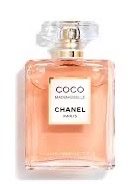
Featured Fragrance
Chanel
Chanel Coco Mademoiselle Eau de Parfum Intense 50ML
Shop this fragrance- Browse the full catalog and shortlist the SKUs you're pricing out.
- Send us your target country and quantity on WhatsApp or Telegram for a confirmed quote.
- Use that confirmed landed cost, not an estimate, to set your retail or wholesale price.
Read more on how to start a fragrance reselling business for the business-model decision that shapes your margin structure, or see the complete wholesale buying guide for the full picture.
Frequently asked questions
What margin should I expect reselling fragrance at retail? It depends heavily on your landed cost, category, and market — there's no single reliable number. Calculate your real landed cost first, then test your retail price against local competition rather than anchoring to a generic industry figure.
Is wholesale-to-retail less profitable than selling direct to consumers? Per unit, usually yes — but it's built on volume, and your buyer needs enough margin room to resell it themselves. Comparing the two models on per-unit margin alone misses the point of either one.
What's the biggest mistake new resellers make when pricing fragrance? Pricing off unit cost instead of real landed cost — which ignores shipping, duties, and handling, and routinely overstates actual margin.
Does order size actually change my margin, or just my total cost? Both. Larger orders typically unlock better per-unit pricing tiers, which directly improves your margin per unit sold, not just your total spend.
Ready to calculate your real numbers? Browse the catalog and get a confirmed quote on WhatsApp before you set your pricing.